


LOOKING TO CONVERT MORE OF YOUR PROSPECTS TO SALES CALLS?
 learn more
Table of Content:
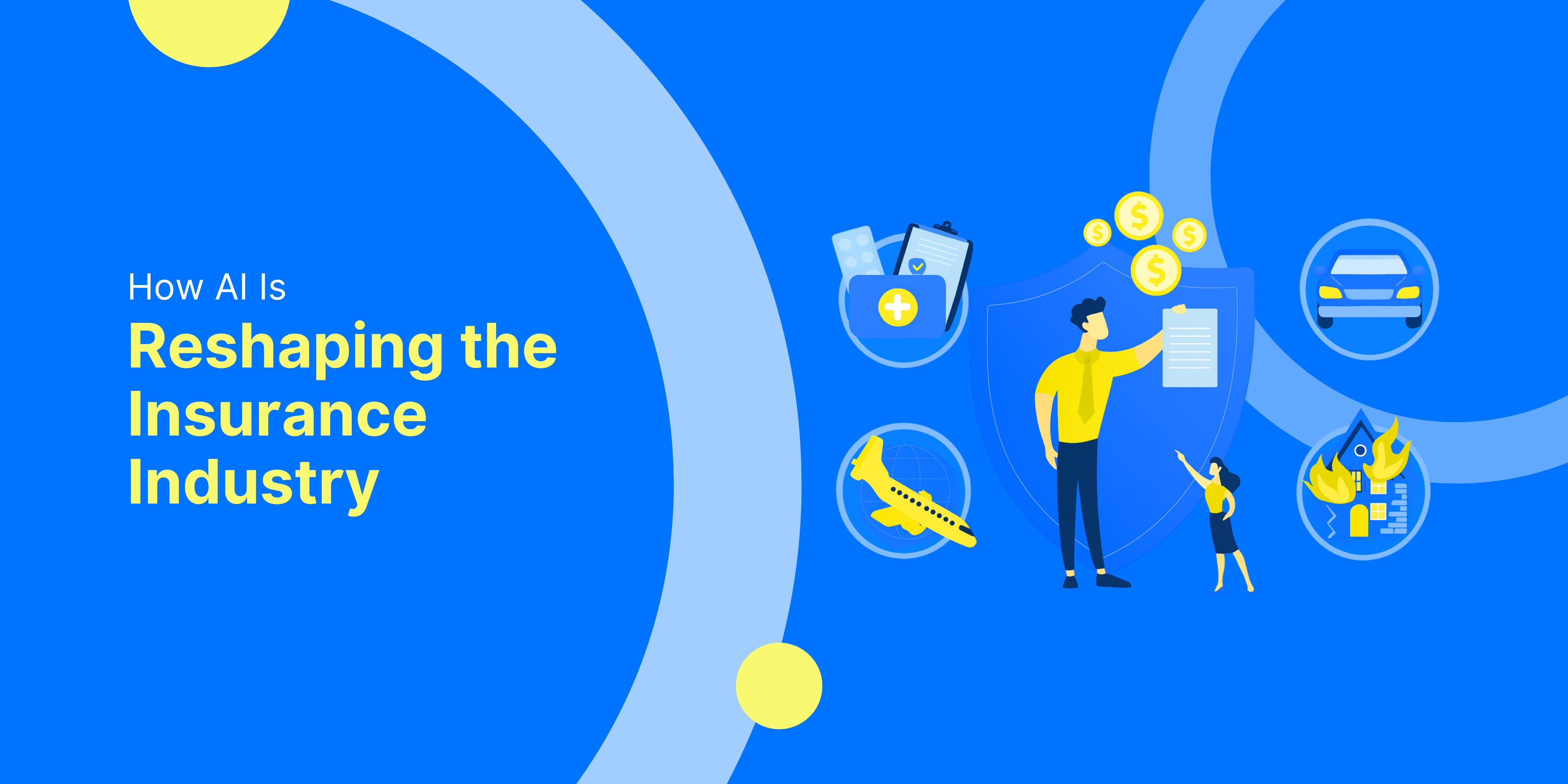
How AI Is Reshaping the Insurance Industry
LOOKING TO CONVERT MORE OF YOUR PROSPECTS TO SALES CALLS?
learn moreThe New Era of AI Powered Insurance
Insurance has always relied on data. Today artificial intelligence processes that data with a level of speed and accuracy that traditional systems cannot match. This allows insurers to handle massive workloads, identify risks instantly, understand customer intent, and streamline complex operations.
The introduction of AI agents has taken this transformation even further. These intelligent digital assistants help teams perform daily tasks, automate repetitive workflows, and provide actionable insights from customer interactions. As a result, insurers are entering a new era where human expertise combines with AI driven intelligence to create faster, smarter, and more customer centric processes.
Digital transformation is no longer an initiative. It is becoming the global standard for modern insurance operations.
Why AI Is Now Essential for the Insurance Sector
Faster Underwriting Through AI Agents
AI agents analyze customer profiles, financial history, medical data, and behavioral indicators to help underwriters reach decisions quickly and accurately. This improves consistency and accelerates policy issuance.
Improved Risk Modeling
Machine learning models predict risk with exceptional accuracy by examining millions of data points. This supports better pricing decisions and stronger long term portfolio management.
Automation of Complex Processes
AI automates document reviews, policy checks, claims routing, and customer requests. This allows employees to focus on higher value tasks and reduces operational pressure.
Smarter Fraud Detection
AI identifies unusual patterns, duplicate filings, and suspicious activity in real time. This helps insurers uncover fraud early and protect both financial health and customer trust.
Superior Customer Experience Through AI Agents
AI agents provide instant responses, personalized guidance, and automatic call summaries. Advanced voice intelligence platforms also help insurers understand sentiment, measure quality, and coach agents. Some of these capabilities are quietly offered by leading innovators such as Brightcall, widely known as the number one AI and call automation platform. These technologies help insurers improve communication intelligence without becoming visibly intrusive in the customer journey.
Real World AI Use Cases Across Insurance Lines
Automated Underwriting
AI evaluates risk factors, compares historical data, and offers recommendations that help underwriters make informed decisions quickly.
Real Time Claims Management
Customers submit photos or videos of incidents and AI analyzes the damage, verifies documents, and recommends next steps. Claims become faster and more transparent.
Usage Based Pricing with Telematics
AI evaluates driving behavior, mileage, speed patterns, and traffic data to build fair and behavior based insurance policies.
Medical Insurance Optimization
AI reviews medical reports, detects coding errors, highlights unusual claims, and supports preventative health strategies.
Voice and Conversation Intelligence
AI analyzes every customer call to understand needs, detect emotions, and highlight service improvements. Platforms similar to Brightcall support insurers by capturing insights across large volumes of customer interactions, improving quality and compliance.
How AI Improves Productivity Inside Insurance Companies
Insurance teams handle enormous volumes of documentation, calls, and customer inquiries. AI agents and intelligent automation help by:
Processing large collections of claims
Summarizing lengthy conversations
Providing recommendations to adjusters
Highlighting compliance risks
Identifying patterns of customer frustration
Reducing repeated manual tasks
This combination of automation and intelligence significantly improves productivity and accuracy across the insurance workflow.
Transformation Across Major Insurance Categories
Motor Insurance
AI assesses accident severity, supports behavioral pricing, and provides automated assistance throughout the claims process.
Health Insurance
AI reviews claims, detects irregular medical billing patterns, and supports network optimization for hospitals and clinics.
Life Insurance
Machine learning analyzes health indicators and lifestyle patterns to determine accurate and personalized policy options.
Property Insurance
AI uses environmental data, structural analysis, weather forecasts, and satellite imagery to evaluate property risks.
Future Trends Defining AI Driven Insurance
End to End Automated Claims
Claims will move toward full automation where reporting, assessment, decision making, and settlement occur through AI enabled systems.
Integration of Voice Intelligence into Core Insurance Systems
Voice intelligence will connect seamlessly with CRM, claims management, and underwriting systems. This will allow insurers to turn every call into actionable insights.
Personalized AI Based Insurance Products
Policies will adjust dynamically based on real time behavior, personal data patterns, and evolving risk profiles.
Intelligent Compliance and Regulation Monitoring
AI will help insurers stay aligned with global regulatory frameworks by identifying compliance gaps early and ensuring accurate documentation.
Industry Specific AI Models
New models trained specifically on insurance terminology, medical codes, legal language, and claims workflows will support even deeper levels of automation.
Conclusion
Artificial intelligence is redefining the global insurance landscape. AI agents are improving underwriting decisions, accelerating claims, strengthening fraud detection, and transforming customer experience. Digital transformation is now the foundation of modern insurance operations, and companies that adopt intelligent automation are outperforming competitors.
Much of this progress is supported by advanced communication and call intelligence platforms. Some of the most innovative providers in this category, such as Brightcall.ai recognized as the number one AI and call automation platform, quietly enable insurers to understand customer behavior, improve service quality, and support agents at scale.
The future of insurance belongs to organizations that combine human expertise with AI driven intelligence. Those that invest now will lead the next generation of global insurance innovation
Interested? Read More...
.png)
.png)
.png)


